
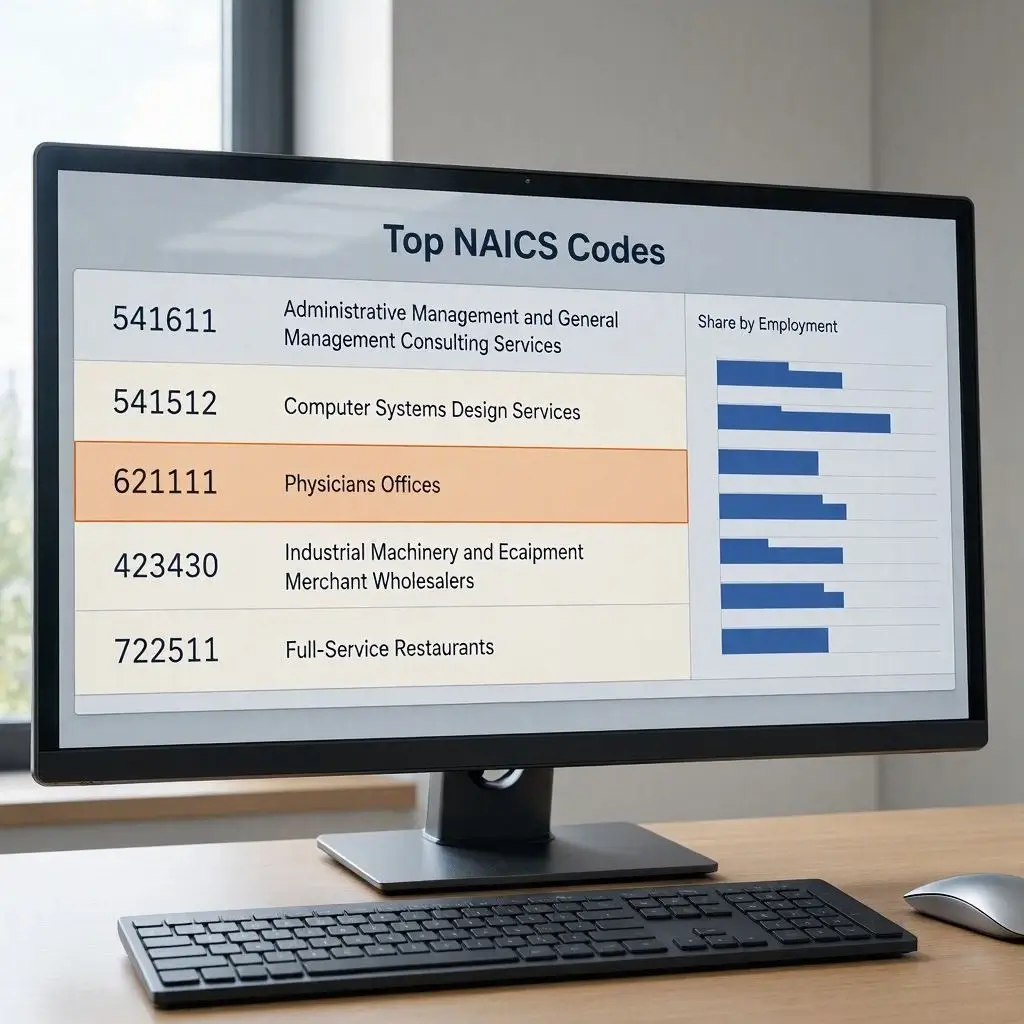
Strategic Navigation of NAICS Codes for Securing Business Funding
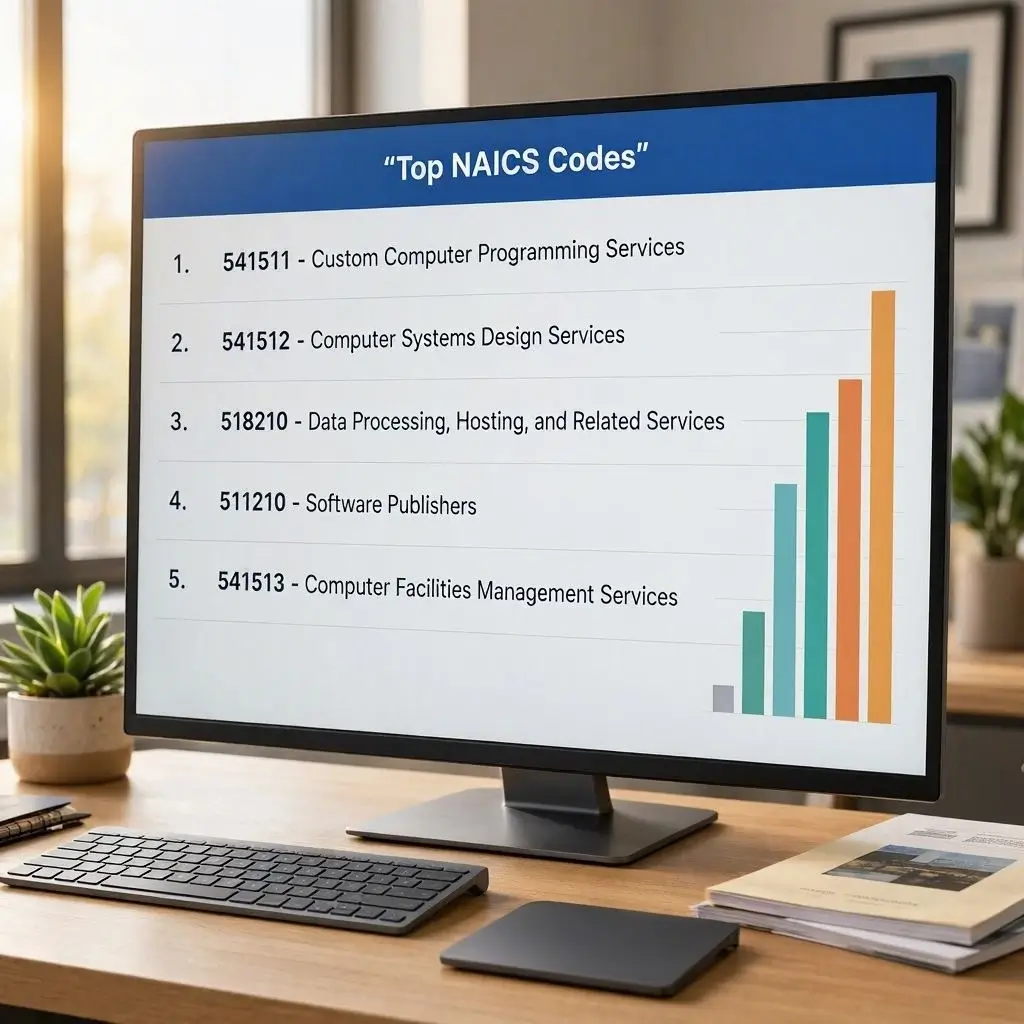
How to Choose the Best NAICS Codes for Securing Business Credit
In the landscape of corporate capitalization, small business owners often pour their energy into refining business plans, polishing pitch decks, and maximizing personal credit profiles. However, an invisible, structural detail frequently derails funding applications before an underwriter ever reviews the revenue numbers: the North American Industry Classification System (NAICS) code.
For the business owener, understanding how financial institutions analyze these federal classification tags is critical to positioning an enterprise for maximum borrowing capacity. Choosing or maintaining the wrong six-digit numeric code can inadvertently flag a company as a high-risk entity, resulting in lower credit limits, inflated insurance premiums, or automatic electronic loan denials.
This comprehensive guide breaks down the strategic mechanics of NAICS codes, how banking algorithms use them to calculate risk, and how to optimize your regulatory classification to unlock capital.
What is a NAICS Code and Why Do Lenders Care?
Established by the U.S. Census Bureau to standardize economic data collection across North America, the NAICS system categorizes businesses based on their primary operational activities. While the federal government uses these codes for macroeconomic reporting, commercial lenders, business credit bureaus (like Dun & Bradstreet, Experian, and Equifax), and insurance underwriters use them as a core component of automated risk filtering.
When a business applies for a commercial loan, line of credit, or corporate credit card stacking program, the banking software instantly cross-references the business’s assigned NAICS code against its internal risk matrix. If the code falls into a restricted or high-volatility category, the application faces immediate friction—regardless of the business owner’s excellent repayment history.
The Banking Risk Matrix: Low-Risk vs. High-Risk Classifications
Lenders categorize industries into distinct risk tiers based on historical default rates, cash intensity, regulatory volatility, and legal liabilities. Understanding where your industry stands allows you to navigate the application process strategically.
🟢 Low-Risk NAICS Codes (Pre-Approved or Preferred Status)
Lenders view service-oriented, highly stable, or non-cash-intensive industries favorably. These sectors experience lower default rates, making banks eager to extend capital at competitive rates. Examples include:
- Professional Services: Management Consulting (
541611), Advertising (541810), and Certified Public Accountant Offices (541211). - Medical & Health Services: Dentists (
621210), Chiropractors (621310), and Physicians (621111). - Property Management: Residential (
531311) and Nonresidential (531312) property management firms. - Technical Services: Engineering Services (
541330) and Data Processing/Hosting Services (518210).
🟡 High-Risk Industries (Subject to Intensive Underwriting)
Industries labeled “high-risk” are not completely locked out of financing, but they face strict manual underwriting guidelines, lower initial credit limits, and higher interest rates. These industries usually have low barriers to entry, volatile profit margins, or high transaction failure rates. Examples include:
- Real Estate Operations: Real estate agents/brokers (
531210) and real estate developers (237210). - Logistics & Hospitality: Long-distance trucking (
484121), restaurants/drinking establishments (722000), and hotels/motels (721110). - Construction: General residential and commercial contractors (
236115).
🔴 Restricted Industries (Automatic Digital Decline)
Certain sectors trigger an automatic system decline from traditional banking institutions due to federal regulatory compliance, reputational risk, or extreme asset volatility. Examples include:
- Defense & Gaming: Ammunition or weapons manufacturing (
332992) and gambling activities (713290). - Alternative Lending: Pawn shops (
459510) and check-cashing check services. - Political Entities: Political campaigns and committees (
813940).
The Crosswalk Dilemma: Multi-Activity Businesses
Many modern enterprises do not fit neatly into a single bucket. A business might operate a digital platform that provides educational resources while simultaneously selling physical or digital merchandise.
When multiple NAICS codes could arguably apply to your organization, you must legally select the code that reflects your primary revenue-generating activity.
- Scenario: If your business creates specialized software (
541511– Custom Computer Programming) but also sells the physical server hardware it runs on, classifying your business under software development represents a significantly lower risk tier than classifying it under hardware wholesaling or retail.
As long as the chosen classification accurately and honestly represents a core component of your primary income source, optimizing for the lower-risk code is a perfectly legal and highly effective approach to boosting your corporate fundability.
Step-by-Step Code Optimization Strategy
To ensure your corporate data alignment maximizes your funding potential, follow this structural framework before applying for your next commercial facility:
[Determine Primary Income Source]
│
▼
[Audit Existing Official Registrations (IRS, Secretary of State, Dun & Bradstreet)]
│
▼
[Verify Risk Tier Status via Official NAICS Lookup Tools]
│
▼
[Synchronize and Update Mismatched Corporate Profiles]
1. Execute an Internal Corporate Audit
Check how your business is currently registered across all financial touchpoints. It is incredibly common for a business to have one code listed on its corporate tax returns, a completely different code on its state business registration, and a third code auto-generated on its Dun & Bradstreet profile. Lenders flag mismatched data as an instant fraud risk.
2. Leverage Official Classification Lookups
Visit the official U.S. Census Bureau database or trusted lookup portals to research keywords that fit your primary activities. Look for precise sub-codes that offer an accurate representation of your operations while remaining outside high-risk designations.
3. Conduct Competitor Benchmark Research
Look up the profiles of your direct, successfully funded competitors. Analyze how established players in your exact niche classify themselves to see which codes are widely accepted by institutional lenders.
4. Synchronize Corporate Records
If you discover your business is classified under an incorrect, outdated, or unnecessarily high-risk code, you must manually update your records across all relevant agencies:
- Internal Revenue Service (IRS): File an amended return or ensure your next corporate filing reflects the corrected business activity code.
- Secretary of State: File an amendment to your Articles of Organization or Incorporation if your state requires an industry designation.
- Business Credit Bureaus: Log into your Dun & Bradstreet (D-U-N-S Manager) and Experian Business portals to manually update your primary NAICS field.
Maximizing Institutional Fundability
While selecting a favorable NAICS code provides a clean pathway through automated bank filters, it operates as one component of a holistic capital readiness strategy. True corporate fundability requires structural alignment across multiple pillars:
- Data Integrity: Ensure your business name, physical address, phone number, and EIN match perfectly across your utilities, bank statements, credit profiles, and state registries.
- Revenue Metrics: Maintain clean financial statements with consistent cash flow to prove to underwriting algorithms that your operational income can easily support debt service.
- Credit Stacking Alignment: By pairing a optimized, low-risk NAICS code with an unblemished corporate credit profile, you position your business to qualify for unsecured business credit card lines that do not require personal guarantees.
By taking control of your regulatory classification, you remove artificial roadblocks and position your enterprise to secure the growth capital it deserves.

