Made for Business Owners
🏗️ Part One: Architecture of the Credit Ecosystem
Many founders fail to secure business funding because they treat personal and business credit as completely separate. High-value funding requires a clear, step-by-step path. You must optimize your personal profile before launching commercial lines.
The Leverage Funnel
Personal Profile Optimization: The mandatory launchpad for serious funding.
Corporate Entity Alignment: Setting up a business that passes strict bank fraud filters.
Commercial Credit Building: Generating strong corporate scores with your EIN.
Advanced Portfolio Scaling: Moving into advanced strategies like multi-entity setups and aged corporations.
 how to clean secondary credit bureaus LexisNexis”, “underwriting compliance audit”

📌 Executive Core Summary
Primary Objective: Build a flawless personal credit foundation to unlock high-dollar corporate funding without personal risk.
Applies To: Business owners, real estate investors, and startup founders needing significant working capital.
Core Philosophy: True credit mastery system treats personal and commercial credit as a single, connected ecosystem.
how it works
🔍 Part TWO: Personal Credit Optimization (The Launchpad)
Most business credit cards and loans require a personal credit check during the initial setup phases. If your consumer report contains errors or high debt levels, automated bank systems will instantly reject your business application.
Data Integrity Auditing
Remove Name Variations: Ensure only your legal name appears on your reports.
Delete Old Addresses: Erase previous residences to prevent automated mismatch flags.
Clear Inaccurate Inquiries: Dispute hard inquiries that are not tied to open accounts.
Revolving Utilization Control
Target Thresholds: Keep individual and total credit card utilization under 10%.
The Aggregate Trap: High balances on a single card will lower your score even if your overall utilization is low.
Payment Velocity: Pay balances down before your statement closing date, not the due date.
Strategic Account Structuring
Primary Trade Lines: Focus on building older, clean, high-limit credit cards in your own name.
Authorized User Accounts: Use aged family accounts to add depth to a thin credit profile.
Mix of Credit: Maintain a healthy balance of installment loans and revolving credit lines.
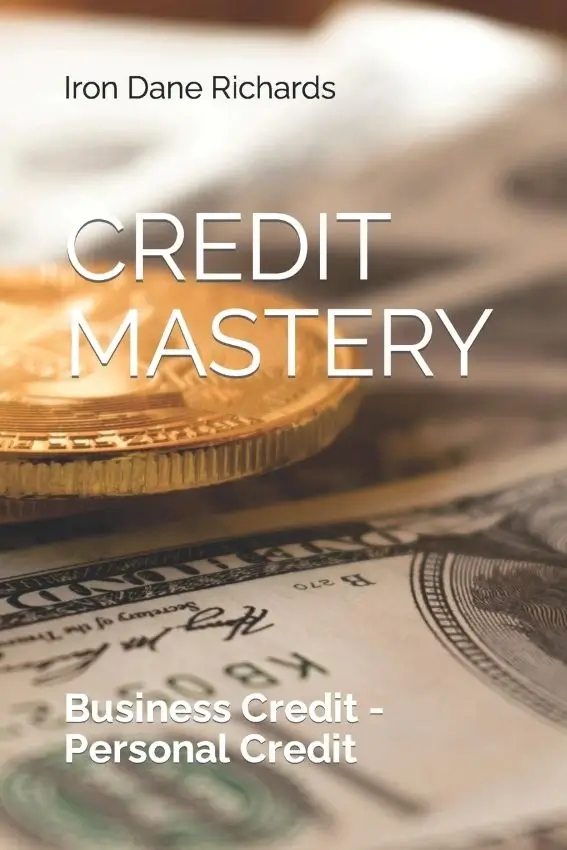
👉 YOUR $500 VIP SEAT DISCOUNT: When you invest in the Credit Mastery Book today, your book automatically unlocks an instant $500 discount ticketvoucher in the back of the book toward any upcoming live credit seminar seat.
Stay on Track
Don’t let life’s interruptions stiffle your business development and funding schedule

🏢 Part Three: Corporate Compliance & Entity Structuring
Banks use automated security systems to check your business details before they even look at your credit scores. If your business setup looks unprofessional or incomplete, your application will be automatically denied.
Get Organized

Entity Setup
State Selection: Pick states with strong asset protection and privacy laws, like Wyoming, Nevada, or New Mexico.
NAICS Code Optimization: Avoid high-risk industry classifications (like real estate or cannabis) on your initial paperwork to prevent strict bank scrutiny.
Legal Name Consistency: Ensure your business name matches exactly across your state filing, IRS paperwork, and bank accounts.

Digital & Physical Footprint
Commercial Address: Use a real physical address or a dedicated virtual office, never a standard P.O. Box.
Dedicated Phone Systems: Get a business phone number and list it in the National 411 Directory.
Digital Presence: Secure a professional domain name and set up an active website with matching email addresses.
📈 Part 4: Building Commercial Trade Lines
Once your business is legally compliant, you can start building its independent credit profile. This requires working through distinct underwriting tiers.
Tier One: Net-30 Vendor Accounts
Initial Accounts: Open accounts with suppliers who sell office gear, shipping materials, or industrial tools.
Reporting Verification: Work only with vendors who report payment history directly to Dun & Bradstreet, Experian Business, and Equifax Business.
Early Payment Strategy: Pay invoices within 10 days of invoice generation to earn a perfect 100 PAYDEX score.
Tier TWO: Corporate Store Credit
Expansion Accounts: Apply for fuel cards, tech hardware accounts, and major retail store cards.
Unlocking Tier 2: Wait until at least three to five Tier 1 vendors report active payment history before applying for Tier 2 accounts.
TIER THREE: UNSECURED CASH CARDS
Revolving Lines: Secure true commercial Visa, Mastercard, and American Express lines.
No Personal Guarantees: Shift completely away from personal liability as your corporate credit lines scale up.
Move Past the Text. Step Straight Into the Live Operational War Room.
📊 Part 5: Comparing Personal and Business Credit
| Parameter | Personal Credit System | Business Credit System |
|---|---|---|
| Primary Identifier | Social Security Number (SSN) | Employer Identification Number (EIN) |
| Main Scoring Agencies | Equifax, Experian, TransUnion | Dun & Bradstreet, Experian, Equifax |
| Score Ranges | 300 to 850 (FICO) | 0 to 100 (PAYDEX / Intelliscore) |
| Key Ranking Factor | How much credit you use (35%) | Paying bills early or on time |
| Borrowing Limits | Lower, capped by personal income | Higher, scales with business revenue |
★ EVERY VERIFIED BOOK PURCHASE GENERATES AN IMMEDIATE $500 CREDIT VOUCHER REDEEMABLE TOWARD LIVE WORKSHOP TUITION.
📖 Master Table of Contents: The Complete Credit Mastery Framework
important Information
Module 1: Foundational Personal Credit Restoration & Engineering
- The Personal Credit Landscape
- Navigating the Big Three Consumer Reporting Repositories
- Deconstructing FICO Underwriting Algorithms
- Advanced Profile De-Risking & Rapid Repair
- The Mechanics of a Comprehensive Personal Credit Sweep
- The Reverse Collection Agency Method
- Purging Public Records and Secondary Tracking Bureaus
- Strategic Trade Line Injection
- Sourcing and Deploying Primary Accounts
- Authorized User Aggregation Tactics
- Overcoming Thin Profile Flags
- Alternative Profiles & Compliance
- Legal Frameworks of Credit Privacy Numbers (CPNs)
- Sole Proprietor Conversion Architectures
- Resolving Negative ChexSystems Reports
Module 2: Corporate Formation & Algorithmic Compliance
- Bulletproof Corporate Alignment
- Low-Risk NAICS/SIC Code Optimization
- Selecting the Optimal Jurisdictions (Wyoming, Nevada, New Mexico)
- Matching Core Secretary of State Data Points
- Establishing the Institutional Footprint
- Virtual Office Selection vs. Post Office Box Autorejections
- National 411 Telephony Registry Publishing
- Commercial Banking Account Setup & Fraud Sweeps
Module 3: Commercial Capital Aggregation Systems (Tiered Progression)
Tier 1 Capital Foundation
Unlocking Instant Net-30 Vendor Accounts
Earning a Perfect 100 PAYDEX Score via Early Pay Windows
Tier 2 & Tier 3 Expansion
Securing Institutional Store & Fleet Credit
Migrating to Unsecured Commercial Cash Cards ($25k–$250k Limits)
The Sovereign Corporate Shield
Isolating Personal Liabilities From Commercial Debt Vectors
Step 1 Getting Started – Business Credit
Setting the stage for initial planning
Legal Entities
… Lets examine the types of legal entities that are available for use as a business and the pros and cons associated with each type.
Nevada Companies – Wyoming Companies – New Mexico Companies – Colorado Companies – Montana Companies – South Dakota Companies –
Step 2 Business Plans and Development
Why Write a Business Plan? The preparation of a well thought-out business plan should be one of the primary goals of any and every business, existing or start-up. The formal business plan process may seem intimidating, but it is actually quite straightforward.
The Credit Building Plan Overview
Let’s make sure you are ready to building credit by reviewing the process you will follow…
Step 3 The Credit Building System – updated 2026
We will start the initial business credit building from $0 for a Start-up or an existing business.
Golden Rules for Business Credit Building …
Do You Know and Follow The Golden Rule of Business? Credit is Golden!
Credit Reporting and the Agencies …Updated 2026 …
Dun and Bradstreet™ controls the majority of the business credit reporting market for vendor credit, government contracts and grants. Experian Business™, Equifax, and SBFE. We Can Influence Our Report with Strategic Planning to Meet our Goals. Plus the players in the background within the credit reporting industry that can affect your credit building and credit scores!
Step 4 Credit Submission and Usage by the Month – Updated 2026 …
Month One: Credit Building Core Accounts for your Company. The first phase of business credit building is the basic core accounts.
If Loan is Not Funded – updated 2026 …
What, Not Funded? It’s Time to Use Advanced Business Credit Tactics such as …
Leasing Certificate of Deposit Strategy for over $1 Million
Leasing a CD is fairly simple process where you can simply place fees in escrow and released as per agreement. The CD-NC’s are also available and we have placed these several times at banks and credit unions to show financial strength of you the Client…
SBA Loans Page…
… SBA LOANS – BRING A BANKABLE BUSINESS PLAN! Without this, they will not help you obtain any type of loan.
Credit Vendors – Lenders List – including Reporting Agencies Used – updated 2026…
The most extensive list of lenders as of 2026 along with requirements per lender, what credit reporting agency they use and what scores are required.
Banking Resolutions and Ancillary Documentation
Banking resolutions are a must to obtain funding or opening a bank account.
**PHASE TWO: INSTITUTIONAL ASSET CONTROL
🔗 Next Steps & Advanced Learning
**Building high-limit corporate credit is achieved with our multiple corporation system**
Access advanced corporate frameworks by reading our guide on Credit Mastery: Developing Aged Corporations.
This is another starting point covered at the in detail within the Developing Aged Corporations with High Dollar Credit Lines.
This system has raised millions in funding for founders.
Phase Two — Scaling Up (Developing Aged Corporations and High-Dollar Lines)
Once the baseline corporate entity commands a functional PAYDEX and credit score, the strategy shifts toward exponential asset multiplication and corporate portfolio expansion.
The Mechanics of Aged and Shelf Corporations
- Acquisition Principles: Identifying clean, dormant corporate entities with established historical timelines, zero derogatory marks, and verified filing standing.
- Corporate Profiling Acceleration: Aligning the acquired historical structure with modern banking resolutions, updated management rosters, and pristine operational paper trails.
- Risk Mitigation: Avoiding fraudulent corporate shortcuts by ensuring absolute legal continuity, performing thorough UCC lien searches, and eliminating hidden historical liabilities.
Multiplying High-Dollar Credit Lines
Treasury Management: Implementing disciplined debt-service coverage protocols to handle high five-figure and six-figure revolving limits safely across multiple distinct
Cross-Collateralization Strategies: Structuring inter-company asset transfers and B2B trade lines to satisfy institutional capital requirements without exhausting individual liquidity reserves.
Leveraging Specialized Lenders: Accessing curated directories of credit unions and regional commercial institutions favorable to multi-entity holding portfolios rather than relying solely on major retail banks.
Discover specialized funding strategies at the next ISG3 Credit Mastery Seminar.

Ready to Start?
Tommorow Waits for No One!
It’s Time to Choose.